
Generative AI: Redefining the Future of Work and Creativity
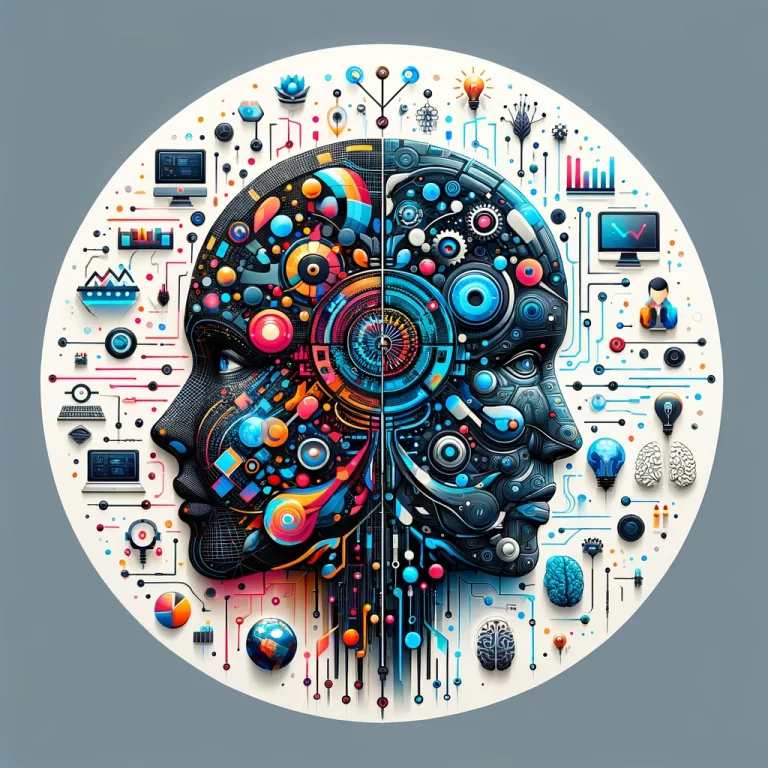
Generative artificial intelligence (Generative AI) is at the forefront of the technological revolution, fundamentally transforming how we work, create, and interact. This technological advance promises to redefine the boundaries of human creativity and productive potential, serving as a complementary tool to increase efficiency and innovation across multiple industries.
Generative AI refers to AI systems that can create new and original content. Unlike traditional AI, which analyzes data based on explicit instructions, generative AI learns from large volumes of data to generate novel outputs, simulating human creativity. This advance is possible thanks to techniques such as Large Language Models (LLMs), Generative Adversarial Networks (GANs), Transformer-Based Models, and Variational Autoencoder Models (VAEs).
Despite its promise, AI faces challenges such as the need for large volumes of high-quality data, data licensing issues, and the complexity of interpreting generated results. Overcoming these obstacles is crucial to unlocking the full potential of generative AI.
While some question whether generative AI could replace professions, it is more appropriate to consider it a tool that enhances creativity and productivity. Professions such as call center operators and lawyers may be transformed, but new opportunities will emerge, requiring adaptation and continuous learning
Applications are diverse and impressive, ranging from text and images to videos and music. Examples include GPT-3 and GPT-4 for text generation, and Dall-e 2 for images, demonstrating this technology’s versatility and ability to create diverse and innovative content.
Generative AI has the power to generate innovative content, from text, images, and music to much more, challenging the traditional notion that creativity is an exclusively human domain. This capability not only accelerates the creative process in fields such as marketing, graphic design, and digital content, but also promotes synergy between human creativity and algorithmic precision.
Advanced data analytics and AI’s predictive capability are reshaping strategic decision-making, enabling more accurate forecasts and valuable insights for process optimization and identification of emerging trends. The adoption of AI in strategic planning is becoming standard practice, affecting everything from supply chain management to market trend forecasting.
The introduction of advanced chatbots and virtual assistants powered by Generative AI is raising the standard of customer service, offering near-human responses and interactions. This innovation allows companies to provide more efficient and available support, freeing professionals to focus on more complex tasks.
Personalized education, adapted to each individual’s learning style, is one of the most exciting promises. The technology is enabling more flexible and accessible teaching methods that can be constantly updated to reflect the latest information and trends.
In R&D, it offers simulations and scenario modeling that can significantly accelerate innovation, from developing new medicines to engineering more efficient automotive designs, reducing both time and associated costs.
As AI takes on routine tasks, it also paves the way for new professions and the need for specialized skills, such as AI literacy, data analytics, and AI ethics. The workforce of the future will be characterized by its ability to collaborate effectively with artificial intelligence.
Ethical and Cultural Challenges
The ethical and responsible adoption of Generative AI is a critical topic, requiring attention to the data used to train algorithms and the potential biases within it. Additionally, the need for cultural fluency in systems based on large language models (LLMs) is essential to avoid misunderstandings and promote technology use that is truly global and inclusive.
Conclusion
Generative AI is redefining the landscape of work and creative innovation, promising an era of increased productivity, unprecedented career opportunities, and a new dynamic between humans and machines. As we explore the vast possibilities this technology offers, it is essential that we prepare for the ethical and cultural challenges that accompany its development and implementation. The trajectory of Generative AI in 2024 and beyond invites us to rethink technology’s role in our society, paving the way for innovations that go far beyond today’s applications. As we move forward, the key to success in the era of Generative AI will be human collaboration with these technologies, leveraging their capabilities to expand our own creative and productive limits. The future promises not only technological advancement, but also a new chapter in the history of human creativity and innovation.
As we have seen, Generative AI has the potential to transform entire industries, from content creation to strategic decision-making, from customer service to education and research. As these technologies evolve, the need for adaptability, continuous learning, and development of new skills becomes more evident. The ability to integrate artificial intelligence into our daily activities ethically and responsibly will be fundamental to maximizing its beneficial potential.
It represents an incredible promise for the future, but it also brings significant responsibilities and challenges. As we navigate this new era, it is crucial that we maintain a balanced perspective, recognizing both the opportunities and the obstacles that arise. By doing so, we can ensure that technology serves society in a positive way, fostering a more innovative, inclusive, and human world.
Therefore, whether you are a professional looking to stay ahead of trends, a content creator exploring new forms of expression, or a business leader seeking competitive advantages, it also offers fertile ground for growth and innovation. The key to unlocking its true potential lies in our ability to adapt, learn, and collaborate with these new digital tools.
In summary, Generative AI is not just an advanced technological tool; it is an invitation to rethink how we live, work, and create. Approaching this invitation with curiosity, caution, and creativity is the first step toward shaping a future that reflects the best of technology and humanity.
Want to learn Databricks from zero to advanced?

For only 37 reais, start your data engineering career today!